
Excision of skin tumours and cutaneous and subcutaneous lesions
Excising skin tumours and cutaneous or subcutaneous lesions can prevent skin cancer and so save lives.
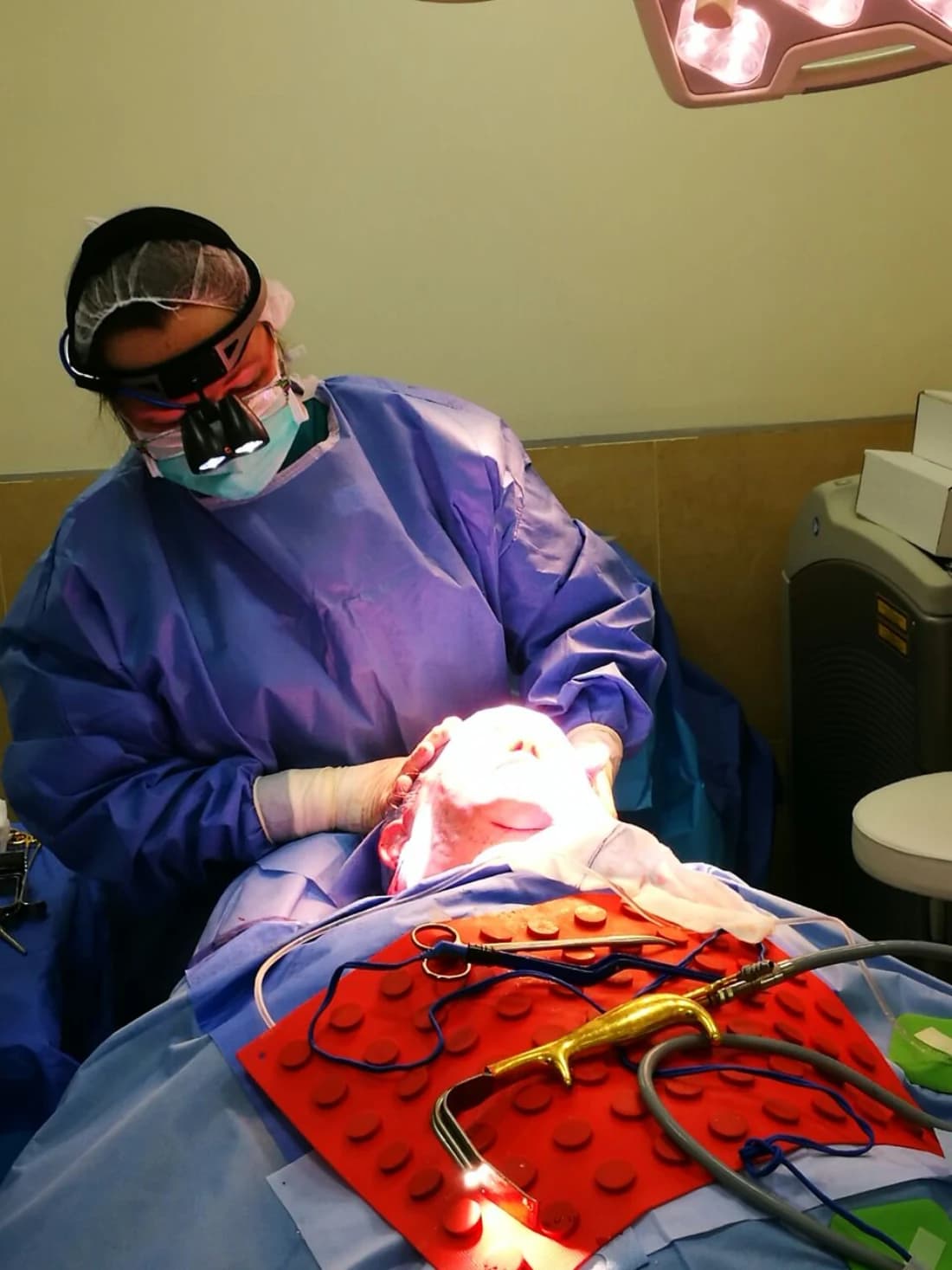
Dr. Galit Avinoam-Dar specialises in excising skin tumours and cutaneous or subcutaneous lesions using the most advanced techniques, which allow focused medical treatment while preserving the healthy skin around the tumour, in order to achieve optimal medical and aesthetic results. Malignant skin tumours are considered common in the Western world, and the risk of developing melanoma and of developing other cancerous tumours is high. Excising skin tumours and cutaneous or subcutaneous lesions can prevent skin cancer and so save lives. Dr. Avinoam-Dar specialises in treating these cases following meticulous and thorough assessment, in order to carry out precise surgical procedures that excise the tumours completely.
Why is it important to diagnose and excise skin tumours and lesions?
- Tumours common on or under the skin, such as solar keratosis, appear as rough, red patches of skin, mainly in areas exposed to the sun. Benign tumours of this kind (pre-malignant) may turn into skin cancer.
- Malignant skin tumours of the melanoma type, and cancerous skin tumours that are not melanoma such as basal cell carcinoma (BCC) and squamous cell carcinoma (SCC), are life-threatening tumours, and so removing them is important to saving the patient.
- Beyond protecting the patient's health, excising skin tumours helps improve appearance and preserve optimal aesthetics where prominent skin tumours are involved.
- The advanced methods available in therapeutic and aesthetic medicine allow optimal assessment and focused treatment with clear advantages.
Do you have skin tumours or cutaneous or subcutaneous lesions? Come soon for broad assessment and focused treatment with Dr. Galit Avinoam-Dar, to protect your health.
Excision of skin tumours and cutaneous or subcutaneous lesions with Dr. Avinoam-Dar
As a specialist in excising skin tumours and cutaneous or subcutaneous lesions, Dr. Avinoam-Dar has diagnosed, identified and treated hundreds of patients in the course of her work who needed skin tumours excised for medical and aesthetic reasons. Every treatment begins with an in-depth assessment of each tumour, in order to carry out a precise, professional medical procedure that allows the patient's health to be protected and the removal to be optimal both medically and aesthetically.
Surgery to excise malignant skin lesions
Malignant skin lesions are a group of skin cancers, the most common of which are:
- Basal Cell Carcinoma
- Squamous Cell Carcinoma
- Malignant Melanoma
These are lesions that must be treated surgically.
It is most important to perform a preliminary biopsy of the lesion in order to establish which type of cancerous lesion is involved, and to decide on further treatment according to the result.
When a biopsy is taken from a lesion suspected of malignancy, then after the lesion is excised the area is either left to heal secondarily or closed with sutures. If the malignant lesion is on the face, or the head and neck, further surgery by the Mohs method is recommended.
Surgery to excise benign skin lesions
Removing these lesions is done under local anaesthetic, by an injection into the skin. Every effort is made to minimise the scar remaining after the lesion is removed.
In order to get full information about recovery time and the individual quality of scarring for a given patient, it is important to discuss this with the operating surgeon before surgery.
- Benign skin lesions such as epidermal cysts, moles, pre-cancerous lesions, skin tags, dermatofibromas, lipomas and the like can be removed by various surgical means.
- Some lesions can be removed by "shaving" the lesion, which leaves no scar; these are lesions protruding above the surface of the skin. Lesions situated deep in the skin are removed by surgical excision, which does leave a scar, though every effort is made to reduce the final scar after the operation.
- It is worth noting that every lesion surgically removed from the skin, even a benign one, is sent for pathological examination in order to rule out another finding within the lesion.